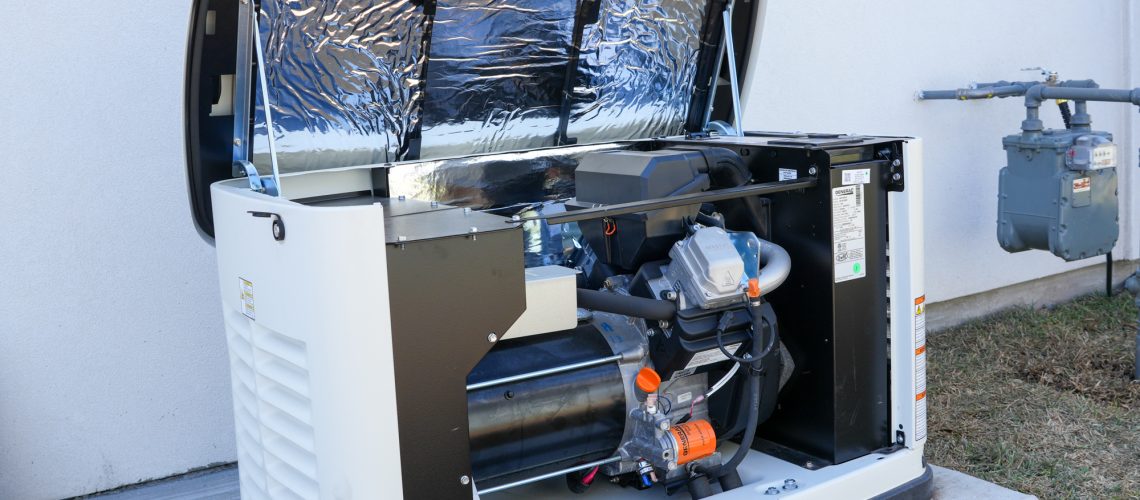
Air-cooled vs liquid-cooled generator systems differ in how they manage engine heat. Air-cooled generators use airflow to help cool the engine, while liquid-cooled generators use coolant, a radiator, and related components to control engine temperature.
For homeowners choosing a standby generator, the right option depends on the size of the home, the amount of power needed, the number of large appliances, budget, installation space, and long-term backup power goals.
What Is an Air-Cooled Generator?
An air-cooled generator uses air circulation to help manage engine heat. These generators are common for many residential standby generator installations because they are compact, practical, and often suitable for standard home backup power needs.
Air-cooled generators are often used for homes that need to power essentials such as lights, refrigeration, outlets, internet, security systems, and some larger systems depending on the generator size and home setup.
Some homeowners also choose air-cooled standby generators because they can be a more practical option when outdoor space is limited. If you are deciding how a generator fits into your home’s daily needs, this article on 9 uses for your Generac generator can help you think through what you may want to power.
What Is a Liquid-Cooled Generator?
A liquid-cooled generator uses coolant and a radiator system to help control engine temperature. This is similar to how many vehicle engines manage heat.
Liquid-cooled generators are often considered for larger homes, higher electrical loads, or properties with several major systems that need backup power. These may include multiple air conditioning units, larger appliances, well pumps, pool equipment, or other high-demand circuits.
Generac’s Protector Series liquid-cooled standby generator specifications show liquid-cooled models across larger standby power options, which is one reason they may be used for homes with heavier backup power needs.
Main Difference Between Air-Cooled and Liquid-Cooled Generators
The main difference is the cooling system.
An air-cooled generator relies on airflow to reduce engine heat. A liquid-cooled generator uses coolant, a radiator, and more advanced cooling components to help regulate temperature.
This difference can affect:
- Generator size
- Power capacity
- Installation space
- Cost
- Maintenance needs
- Noise level
- Long-term performance
- Suitability for larger homes
Neither option is automatically better for every home. The best choice depends on what the generator needs to power and how the system will be used.
When an Air-Cooled Generator May Be the Better Option
An air-cooled generator may be the better choice for many homeowners who want reliable standby power without needing a larger commercial-style system.
An air-cooled generator may make sense if:
- Your home has standard backup power needs
- You want to power essential circuits and selected major systems
- You have limited outdoor installation space
- You want a more common residential standby option
- Your electrical load does not require a larger liquid-cooled system
- You want a practical balance of performance and cost
Generac’s air-cooled standby generator specifications show how some residential air-cooled models are designed for whole-home backup power, depending on the home’s electrical needs.
When a Liquid-Cooled Generator May Be the Better Option
A liquid-cooled generator may be a better fit for larger homes or properties with heavier electrical demand.
A liquid-cooled generator may make sense if:
- Your home has multiple air conditioning systems
- You want to support more high-demand appliances
- You have a larger home with greater power needs
- Your backup power plan includes several major systems
- Your installer recommends a larger standby generator
- You want a system designed for higher-capacity applications
Liquid-cooled generators may also be considered when an air-cooled model cannot comfortably support the home’s backup power goals.
Cost and Installation Considerations
Cost is often one of the biggest differences between air-cooled and liquid-cooled generators.
Air-cooled generators are often more common in residential installations and may be more budget-friendly for many homeowners. Liquid-cooled generators may cost more because they are often larger, have more cooling components, and may require a more involved installation.
However, cost should not be the only deciding factor. A lower-cost generator is not the right choice if it cannot support your home’s essential systems. At the same time, a larger generator is not always necessary if your home does not need that much capacity.
If you are comparing costs, this guide on how much it costs to install a whole-home generator can help you understand what may affect the overall project.
Maintenance Differences
Both air-cooled and liquid-cooled generators need regular maintenance. The main difference is that liquid-cooled systems may have additional cooling system components that need to be checked.
Air-cooled generator maintenance may include items such as oil, filters, spark plugs, battery checks, airflow checks, and general inspection.
Liquid-cooled generator maintenance may include many of the same items, along with coolant level checks, hoses, radiator condition, and other cooling system components.
Because maintenance needs can vary by model, homeowners should follow the manufacturer’s maintenance schedule and work with a qualified generator professional.
Which One Is Best for South Florida Homes?
For many South Florida homes, an air-cooled standby generator may be enough if the system is properly sized and installed. It can support essential circuits and selected major systems during an outage.
However, a liquid-cooled generator may be better for larger homes, homes with multiple AC units, or properties where the homeowner wants to power more high-demand systems at the same time.
South Florida homeowners should also consider heat, humidity, storm exposure, fuel availability, outdoor space, and local installation requirements. A qualified installer can review the home and recommend the right generator type based on actual power needs.
Questions to Ask Before Choosing
Before deciding between an air-cooled and liquid-cooled generator, ask these questions:
- What do I need the generator to power?
- How many air conditioning units do I want backed up?
- Do I need whole-home coverage or selected circuit coverage?
- How much outdoor space is available?
- What fuel source will the generator use?
- What is my installation budget?
- How long do outages usually last in my area?
- What maintenance will the generator need?
- Which option does a professional recommend after reviewing my home?
The right answer should be based on the home’s real electrical demand, not just the generator size listed on a product page.
When to Call a Generator Professional
You should speak with a generator professional before choosing between an air-cooled and liquid-cooled generator. A professional can inspect your electrical panel, review your power needs, discuss fuel options, and recommend the right system for your home.
Professional guidance is especially important if you want to power multiple large systems, such as air conditioning, pool equipment, electric appliances, or medical equipment.
For a proper setup, professional standby generator installation can help make sure the generator type, size, location, and connection are planned correctly.
Final Thoughts
Air-cooled vs liquid-cooled generator selection comes down to your home’s power needs, budget, space, and long-term reliability goals. Air-cooled generators are often a practical choice for many residential homes, while liquid-cooled generators may be better for larger homes or heavier backup power demands.
The best choice is the one that can safely and reliably support the systems you need during an outage.
If you are comparing air-cooled and liquid-cooled standby generators, Generator Supercenter of South Florida can help you review your options and choose a system that fits your home.
FAQs
What is the difference between an air-cooled and liquid-cooled generator?
An air-cooled generator uses airflow to help manage engine heat. A liquid-cooled generator uses coolant, a radiator, and related components to help regulate engine temperature.
Is an air-cooled generator enough for a whole house?
It can be, depending on the size of the home and what the generator needs to power. Many homes can use an air-cooled standby generator, but larger homes may need a liquid-cooled option.
When should I choose a liquid-cooled generator?
A liquid-cooled generator may be better for larger homes, homes with multiple AC units, or properties with several high-demand systems that need backup power.
Are liquid-cooled generators more expensive?
They may cost more because they are often larger and include more cooling system components. Installation may also be more involved depending on the home.
Which type of generator is best for South Florida?
It depends on the home. Many South Florida homes may be served by an air-cooled standby generator, while larger homes or homes with heavier electrical loads may need a liquid-cooled system.