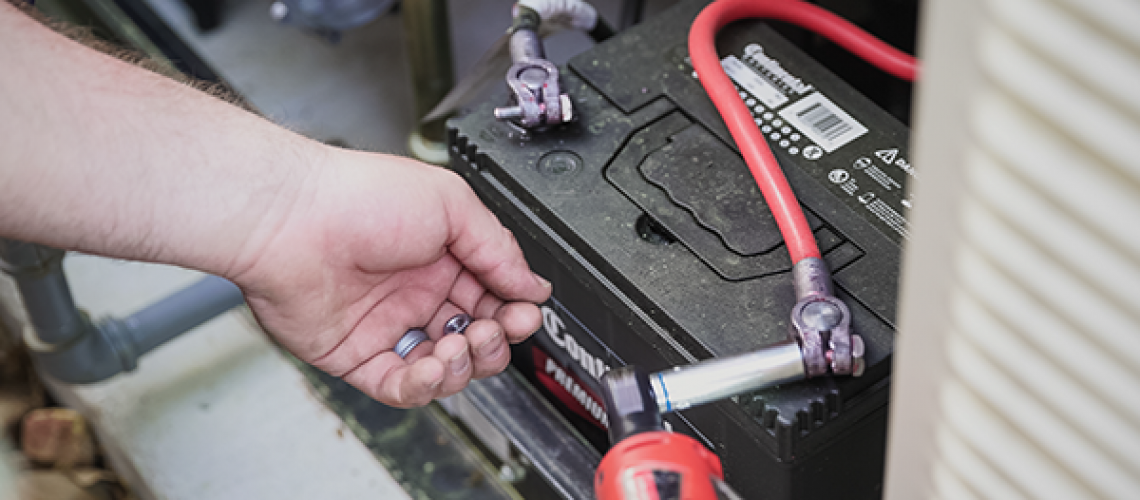
If your generator battery keeps dying, the problem may be an old battery, charging issue, loose connection, maintenance problem, or electrical fault. A dead or weak battery can prevent a standby generator from starting when the power goes out.
For homeowners, this is more than a small inconvenience. A standby generator needs a healthy battery to start automatically during an outage, so repeated battery failure should be inspected before the next power loss.
Why a Healthy Generator Battery Is Important
A standby generator battery provides the starting power needed to turn the engine on. Even if the generator has fuel and is otherwise in good condition, a weak battery can stop it from starting.
The battery is especially important because standby generators often sit quietly for long periods. When an outage happens, the system needs to start without delay. If the battery is low, damaged, or not charging correctly, the generator may fail when you need it most.
If your generator is already showing warning lights or fault messages, professional standby generator service can help identify whether the battery is the main issue or part of a larger problem.
Common Reasons a Generator Battery Keeps Dying
A generator battery can die for several reasons. Some are simple, while others require professional diagnosis.
Common causes may include:
- Old battery age
- Weak or failing battery cells
- Loose or corroded battery cables
- Charging system issue
- Blown charging fuse
- Wiring problem
- Generator not receiving charging power
- Long periods without proper maintenance
- Control panel or charger warning
- Extreme outdoor conditions
- A battery that was not installed correctly
If the same battery problem keeps coming back, it should not be ignored. Replacing the battery may only be a temporary fix if the real issue is with the charging circuit or wiring.
The Battery May Be Old or Weak
Like car batteries, generator batteries do not last forever. Over time, a battery can lose its ability to hold a charge.
A weak battery may still appear to work during a light test, but it may not have enough power to start the generator during an outage. This is especially true if the unit has been sitting for a long time or has not been serviced regularly.
Signs of an aging battery may include:
- Slow cranking
- Failed startup
- Low battery warnings
- Repeated battery replacement
- Corrosion around terminals
- Generator not starting during exercise cycles
If the battery is older or showing signs of weakness, a technician can test it and confirm whether replacement is needed.
The Battery May Not Be Charging
A generator battery keeps dying when it is not receiving the charge it needs.
Many Generac home standby generators use a built-in battery charger. Generac explains that the charging system may rely on a 120 VAC T1 charging circuit to help keep the starting battery charged while utility power is available. Homeowners can review Generac’s official guide to how a home standby generator battery is charged for more details.
If that charging circuit has a problem, the generator may continue to drain the battery without properly recharging it. This can lead to repeated dead battery issues.
Possible signs of a charging problem include:
- Charger warning message
- Charger Missing AC message
- Battery dying soon after replacement
- Generator showing warning lights
- Battery voltage staying low
- Generator failing to start after sitting
Charging problems should be handled by a qualified professional because they may involve wiring, transfer equipment, fuses, and the generator control system.
Loose or Corroded Connections Can Cause Problems
Battery cables and terminals need a clean, secure connection. If the connection is loose, dirty, or corroded, the generator may not receive enough power to start properly.
Corrosion can also interfere with charging. Even if the battery itself is still usable, poor connections can make the generator act like the battery is weak or dead.
A technician may check:
- Battery terminals
- Cable tightness
- Corrosion buildup
- Ground connections
- Charger connections
- Related wiring
Homeowners should avoid forcing, bypassing, or modifying battery connections. If corrosion is heavy or the generator shows a warning, it is safer to schedule service.
Lack of Maintenance Can Shorten Battery Life
Regular maintenance helps catch battery problems before they cause a failed startup.
Generac’s home standby generator maintenance schedule includes checking battery condition, electrolyte level, and state of charge as part of scheduled maintenance for certain home standby models.
During maintenance, a professional may also check the charger, terminals, wiring, and control panel warnings.
For long-term reliability, homeowners can learn more about preventative maintenance for your whole-home generator and why it matters before outage season.
Outdoor Conditions Can Affect Battery Performance
Generator batteries are exposed to outdoor conditions because standby generators are installed outside the home. Heat, humidity, storms, and long periods between use can all affect battery condition over time.
In warm, humid areas, corrosion and electrical wear may happen faster if the generator is not inspected regularly. Heavy rain, debris, or moisture intrusion can also create problems around electrical components.
This is why regular inspection is important. The goal is to catch small battery or charging issues before they stop the generator from starting.
Should You Replace the Battery Yourself?
Some homeowners may be comfortable replacing a generator battery, but it is not always the best first step.
If the battery is simply old, replacement may solve the problem. However, if the generator battery keeps dying after replacement, the issue may be the charger, wiring, fuse, transfer equipment, or control system.
Before replacing the battery again, ask a professional to inspect the system. This can help prevent wasted money and repeated battery failure.
If your unit has other signs of trouble, this guide on generator repair vs replacement can help you understand when a repair issue may point to a larger decision.
When to Call a Generator Professional
You should call a generator professional if:
- The generator battery keeps dying
- The generator will not start
- The generator cranks slowly
- A charger warning appears
- A red or yellow warning light is showing
- The battery dies soon after replacement
- Terminals are heavily corroded
- You smell fuel or see signs of damage
- The generator failed during an outage
- You are not sure whether the battery is charging
A qualified technician can test the battery, inspect the charging system, check the wiring, and confirm whether the issue is simple or more serious.
Final Thoughts
If your generator battery keeps dying, the issue should be checked before the next outage. A weak battery, charging problem, loose connection, or maintenance issue can stop a standby generator from starting when your home needs backup power.
Replacing the battery may help in some cases, but repeated battery failure usually needs a closer inspection.
If your standby generator is showing battery warnings or failing to start, Generator Supercenter of South Florida can inspect the system, identify the cause, and help keep your generator ready for future outages.
FAQs
How do I know if my generator battery is bad?
Common signs include slow cranking, failure to start, low battery warnings, corrosion, or a battery that will not hold a charge.
Can a standby generator run with a dead battery?
A standby generator usually needs the battery to start. If the battery is dead, the generator may not turn on during an outage.
Why does my new generator battery keep dying?
If a new battery keeps dying, the issue may not be the battery itself. The generator may have a charging circuit, fuse, wiring, or control system problem.
How often should a generator battery be checked?
Battery checks should be part of regular generator maintenance. Homeowners should also check the owner’s manual or ask a professional for the recommended schedule for their specific model.
Should I ignore a charger warning on my generator?
No. A charger warning may mean the battery is not being charged properly. If the warning stays on or returns, the generator should be inspected.