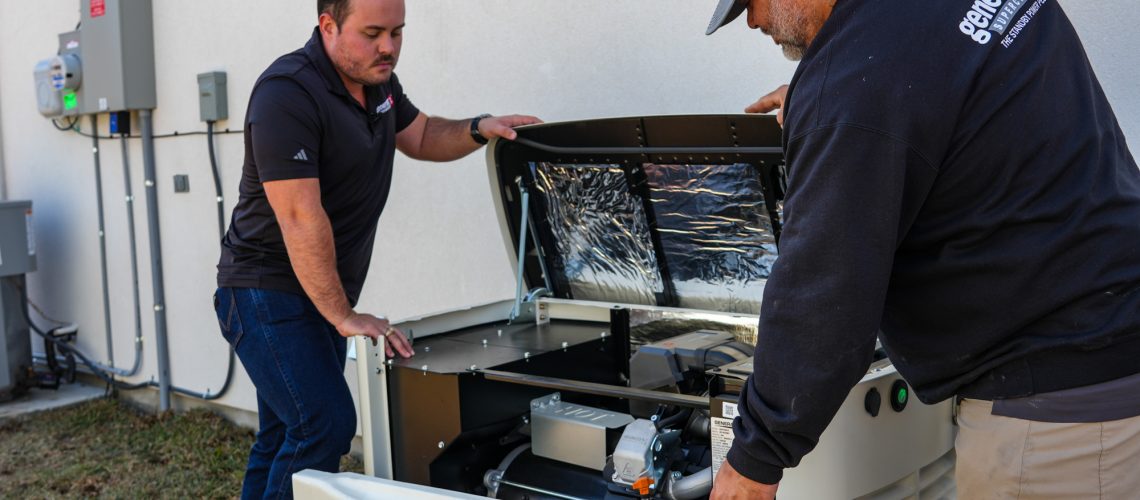
Generator repair vs replacement depends on the age of the unit, the type of problem, repair cost, part availability, and how reliable the generator still is during an outage. In many cases, a simple issue can be repaired. However, repeated breakdowns or major system problems may make replacement the better long-term choice.
For South Florida homeowners, this decision matters because standby generators often protect the home during storms, outages, and hot-weather power disruptions. If your generator cannot start, transfer power, or support your essential systems when needed, it is worth having the unit inspected before deciding what to do next.
When Generator Repair Makes Sense
Generator repair may be the better option when the problem is isolated, the generator is still in good condition, and replacement parts are available.
Repair may make sense if the issue involves:
- A weak or dead battery
- Dirty filters
- Worn spark plugs
- Low oil or old oil
- A minor sensor issue
- A service warning
- A loose connection
- A fuel supply issue
- A control panel problem
- A startup issue that can be corrected
These problems do not always mean the generator needs to be replaced. Sometimes, a professional diagnostic visit can identify a specific part or maintenance issue that can be fixed.
If your unit is not working properly, professional standby generator service can help determine whether the issue is repairable or a sign of a bigger problem.
When Generator Replacement May Be Better
Replacement may make more sense when the generator has major damage, repeated failures, outdated parts, or no longer meets the home’s backup power needs.
A replacement may be worth considering if:
- The generator breaks down often
- Repairs are becoming more expensive
- Parts are difficult to find
- The engine has serious damage
- Corrosion is affecting major components
- The unit struggles during outages
- The generator no longer powers the systems you need
- The system has safety concerns
- The generator is near the end of its useful life
A generator that needs one repair is not always a problem. A generator that needs constant repairs may become less dependable over time.
If you are unsure how much life your current system may have left, this guide on the life of a whole house generator can help you understand the factors that affect long-term performance.
Repair Cost vs Replacement Cost
Cost is one of the biggest factors in the generator repair vs replacement decision.
A lower-cost repair may be worthwhile if the generator is otherwise reliable. However, if the repair is expensive and the generator has other signs of wear, replacement may offer better long-term value.
Before deciding, homeowners should consider:
- The cost of the current repair
- The number of recent repairs
- The age and condition of the generator
- Whether parts are still available
- Whether the generator is properly sized for the home
- How often the home loses power
- Whether the system can still support essential circuits
The cheapest option today is not always the most cost-effective option over time. If a generator keeps failing during outages, the inconvenience and risk may outweigh the savings of another repair.
Warning Signs Your Generator Needs Attention
A standby generator often shows signs of trouble before it completely fails.
Common warning signs include:
- The generator does not start during a test cycle
- Warning lights or error messages appear
- The unit shuts down unexpectedly
- The generator runs rough
- You notice unusual noises
- There is visible corrosion
- The battery keeps failing
- The unit leaks oil or coolant
- The generator starts but does not power the home correctly
- The system struggles during longer outages
Any of these signs should be checked by a professional. A small issue can become more serious if the generator is ignored.
For better long-term performance, homeowners can also review tips to keep your standby generator operating at peak efficiency.
How Maintenance Affects the Decision
Maintenance plays a major role in whether a generator is worth repairing or replacing.
A generator with a strong maintenance history may be a better repair candidate because it has likely received regular oil changes, filter changes, battery checks, and system inspections. A neglected generator may have hidden wear that makes future problems more likely.
Generac’s support resources provide general guidance on home standby generator maintenance schedules based on run hours and time intervals. Homeowners can review the official Generac home standby generator maintenance schedule for manufacturer maintenance guidance.
If your generator has not been serviced recently, this guide to routine whole-home generator maintenance can help you understand why regular care matters.
South Florida Factors to Consider
South Florida conditions can make generator reliability even more important.
Heat, humidity, salt air, heavy rain, and hurricane-season outages can place extra stress on standby generator systems. A generator may sit unused for long periods, then be expected to run for hours or days during an emergency.
Because of this, homeowners should think beyond the immediate repair. The real question is whether the generator can still be trusted when the next outage happens.
If the unit is older, has corrosion, or has failed during previous storms, replacement may be worth discussing with a professional.
Questions to Ask Before Deciding
Before choosing repair or replacement, ask these questions:
- What exactly is wrong with the generator?
- Is the problem minor or major?
- Are replacement parts available?
- Has this issue happened before?
- Is the generator still properly sized for the home?
- How often has the generator been serviced?
- Did the generator perform well during the last outage?
- Is the repair cost reasonable compared to the unit’s condition?
- Would replacement offer better reliability?
A professional inspection can help answer these questions clearly.
Final Thoughts
Generator repair vs replacement is not always a simple decision. If the issue is minor and the generator is still reliable, repair may be the best choice. If the system has repeated problems, major damage, or no longer supports your home’s needs, replacement may be the smarter investment.
For South Florida homeowners, reliability is the most important factor. A standby generator should be ready before the next outage, not uncertain when you need it most.
If your generator is showing signs of trouble, Generator Supercenter of South Florida can inspect the system, explain your repair options, and help you decide whether repair or replacement is the best option for your home.
FAQs
Is it better to repair or replace a generator?
It depends on the generator’s age, condition, repair cost, part availability, and reliability. Minor issues may be worth repairing, while repeated failures or major damage may make replacement a better choice.
What are signs that a generator needs repair?
Common signs include failure to start, warning lights, rough running, unusual noises, leaks, battery problems, corrosion, or trouble powering the home during an outage.
When should I replace my standby generator?
Replacement may be worth considering if the generator breaks down often, has major engine or electrical problems, has hard-to-find parts, or no longer powers the systems your home needs.
Can regular maintenance help avoid replacement?
Yes. Regular maintenance can help reduce wear, catch small issues earlier, and keep the generator ready for outages. However, maintenance cannot always prevent replacement if the unit has major damage or is near the end of its service life.
Should I repair an older generator?
An older generator may still be worth repairing if it is in good condition and the repair is minor. If repairs are frequent or expensive, replacement may be more practical.
Who should inspect my generator before I decide?
A qualified generator technician should inspect the unit. They can diagnose the issue, check the condition of major components, and explain whether repair or replacement is the better option.